
Managed CNAPP for Overloaded Security Teams: When to Outsource
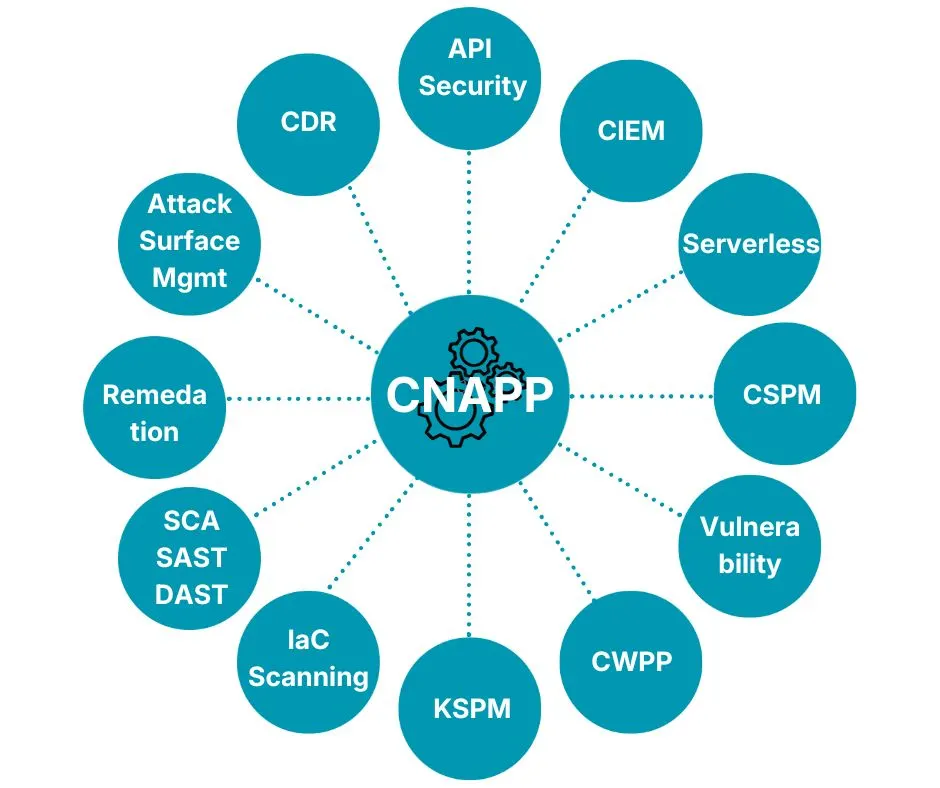
As Indian enterprises accelerate cloud adoption, security teams are under extreme operational pressure. Cloud environments no longer consist of a few virtual machines and firewalls. They now include dynamic Kubernetes clusters, container images, APIs, serverless functions, identity entitlements, and continuously changing cloud services.
While CNAPP platforms bring posture management, workload protection, identity security, and Kubernetes visibility under one architecture, running these platforms still requires skilled operations, threat triage, and continuous remediation. For many organizations, especially fast-scaling companies, managing CNAPP internally becomes unrealistic.
This is why managed CNAPP services are emerging as the preferred model for security teams that are overloaded, understaffed, or growing rapidly.
Must Read: CNAPP vs CSPM vs CWPP Enterprise Buying Guide 2025
Why Cloud Security Is Overwhelming for Small Security Teams
Small and mid-sized security teams face a fundamental imbalance between workload and available expertise.
Multi-cloud complexity
A single cloud account can generate thousands of misconfiguration findings. When teams operate across AWS, Azure, and GCP, the exposure multiplies rapidly.
Continuous change velocity
Developers deploy new services daily. Kubernetes clusters scale up and down dynamically. API endpoints change with every new release. Security controls must keep up in near real time.
Identity risk expansion
Cloud identity is now one of the largest attack surfaces. Service accounts, roles, and automated identities grow unchecked across environments.
Limited cloud security skill sets
Most security teams were originally trained on perimeter security and on-prem infrastructure. Cloud identity, Kubernetes hardening, and API security require specialized skills that are hard to hire.
For small teams, the result is constant backlog. CNAPP finds thousands of risks but there are not enough hands to act on them.
Agent vs Agentless Operational Burden
Both agent-based and agentless CNAPP deployment models introduce operational responsibilities that many teams underestimate.
Agentless CNAPP operations
Agentless CNAPP relies on cloud APIs for visibility. While onboarding is fast, operations still include:
Continuous API permission management
Cross-account onboarding and revocation
Alert tuning to reduce noise
Compliance policy configuration
Remediation rule testing
Agent-based CNAPP operations
Agent-based CWPP and Kubernetes runtime protection require:
Agent rollout across all workloads
Version upgrades
Performance tuning
Kernel compatibility checks
Container runtime integration
For overloaded teams, this operational burden competes directly with incident response, SIEM monitoring, and vulnerability management.
Managed CNAPP eliminates this daily tooling friction.
Continuous Compliance Overhead
Cloud compliance is not a quarterly audit exercise anymore. It is continuous.
Security teams must constantly enforce:
ISO 27001
SOC 2
PCI DSS
RBI cyber security guidelines
DPDP Act data protection controls
CNAPP platforms continuously map misconfigurations and identity risks to these frameworks. However, compliance reporting still requires:
Policy maintenance
Exception management
Evidence generation
Audit coordination
Control validation
For small teams, this compliance load becomes unmanageable without dedicated cloud governance staff.
Value of Managed CNAPP Using an MSSP-Like Model
Managed CNAPP is delivered in a model similar to managed security services, but focused on cloud-native risk.
What managed CNAPP providers deliver
Full CNAPP platform operations
Continuous CSPM, CWPP, CIEM, and Kubernetes monitoring
Alert triage and prioritization
Misconfiguration validation
Vulnerability risk assessment
Identity exposure analysis
Automated remediation execution
Compliance mapping and audit readiness
Monthly security posture reporting
What the customer retains
Cloud ownership
Remediation approval authority
DevOps integration control
Final risk acceptance decisions
This model allows security teams to consume cloud security as an outcome rather than as a tooling burden.
Cost Comparison: In House CNAPP vs Managed CNAPP
In House CNAPP Cost Components
CNAPP license and log ingestion
CIEM and Kubernetes add-ons
Cloud security engineers
Platform administrators
Compliance analysts
Training and certification programs
For a mid-sized enterprise, monthly in house CNAPP operating cost typically ranges between:
Technology and licensing: INR 2.5 to 5.0 lakhs
Security engineering staff: INR 4.0 to 7.0 lakhs
Total monthly spend: INR 6.5 to 12.0 lakhs
Managed CNAPP Cost Model
Managed CNAPP pricing usually includes:
Full CNAPP licensing
24 by 7 monitoring of cloud risks
Automated remediation workflows
Compliance reporting
Advisory support
For the same enterprise scale, managed CNAPP typically costs:
INR 2.5 to 5.5 lakhs per month
This makes managed CNAPP 40 to 60 percent more cost efficient for most small and mid-sized companies.
Why Managed CNAPP Is Ideal for Fast-Scaling Companies
Fast-scaling companies face unique cloud security challenges:
Rapid infrastructure growth
Cloud environments can double in size within months. Security tooling and staffing rarely scale at the same pace.
DevOps-driven change velocity
Engineering teams push features at a speed that overwhelms security review cycles.
Investor and regulatory pressure
Startups and growth-stage companies face intense scrutiny on data protection, breach risk, and compliance readiness.
Limited security headcount
Security teams often consist of two to five people who already manage SIEM, MDR, IAM, and vulnerability platforms.
Managed CNAPP allows these organizations to:
Maintain enterprise-grade cloud security
Meet compliance expectations
Avoid large upfront hiring
Stay focused on business growth
When In House CNAPP Still Makes Sense
Managed CNAPP is not always the best choice. In house CNAPP can be justified when:
The organization has a mature cloud security engineering team
DevSecOps practices are deeply embedded
Regulatory constraints require full internal control
The cloud footprint is extremely large and customized
Threat hunting on cloud workloads is a strategic priority
These conditions apply to a limited number of digital-first enterprises with advanced security maturity.
Relationship Between Managed CNAPP and SOC or MDR
CNAPP is not a replacement for SOC or MDR. It complements them.
CNAPP secures cloud posture, workloads, identities, and Kubernetes
SOC and MDR focus on detection, investigation, and response across endpoints, networks, and identities
In a mature security architecture:
CNAPP feeds cloud risk context into AI SIEM
SOC investigates runtime threats confirmed by CNAPP
MDR teams execute response across identity, endpoint, and network layers
This integrated model closes the gap between cloud security governance and real incident response.
Also Read: AI SIEM vs Legacy SIEM Enterprise Buying Guide
If your security team is struggling to keep up with cloud misconfigurations, identity exposure, and Kubernetes risk, a managed CNAPP assessment can reveal whether outsourcing will reduce both risk and operational cost.
This assessment maps your cloud footprint, risk saturation, and remediation capacity into a clear in house versus managed CNAPP decision.
FAQs
1) What is managed CNAPP
Managed CNAPP is a service where a third-party provider operates the CNAPP platform, monitors cloud risks, validates findings, and executes remediation workflows on behalf of the enterprise.
2) Is managed CNAPP suitable for startups and mid-sized companies
Yes. Managed CNAPP is especially effective for fast-growing companies that lack dedicated cloud security engineering teams.
3) Does managed CNAPP replace cloud security engineers
No. It reduces operational workload but strategic cloud security architecture and risk ownership remain internal responsibilities.
4) Can managed CNAPP integrate with AI SIEM and SOC
Yes. Managed CNAPP platforms feed cloud posture and runtime telemetry into AI SIEM and SOC workflows for unified detection and response.