
How AI workflow orchestration reduces manual operations in enterprise teams
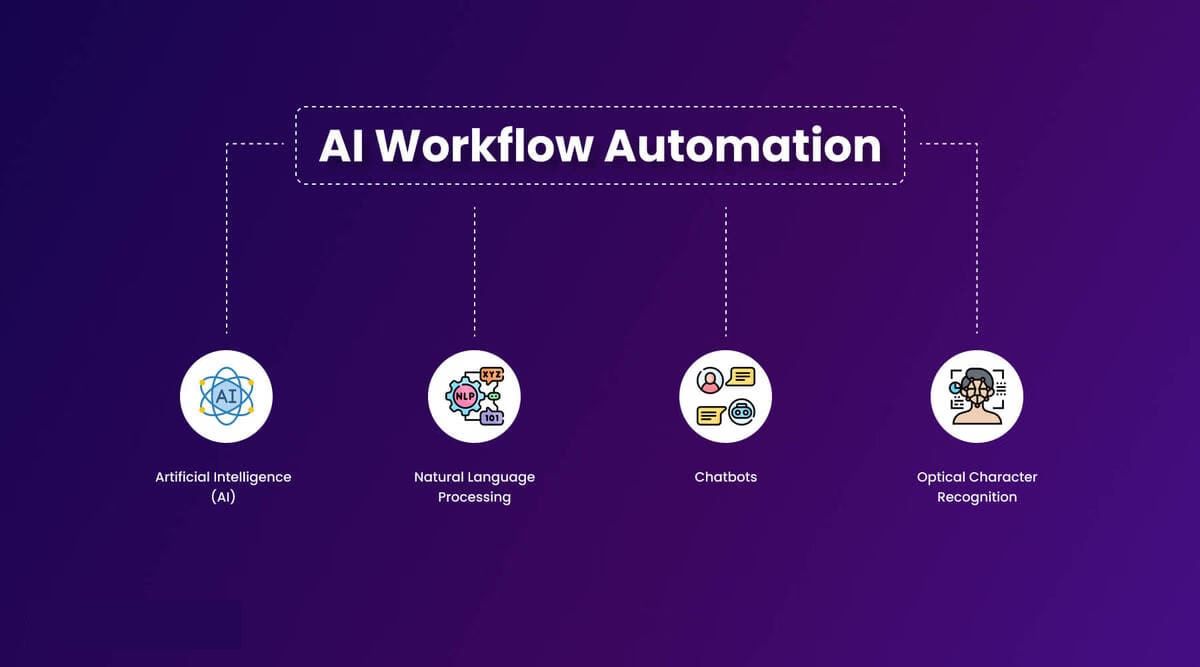
Manual operations are not just slow — they are structurally expensive
Every organisation has processes that require a person to take an action before the next person can begin theirs. Someone submits a request. Someone else reviews it. A third person enters the data into another system. A fourth follows up when nothing moved. None of these steps require particular skill or judgement — they just require a human body to push something forward.
This is what manual operations actually cost. Not just time, but accumulated drag across every team, every day, every request sitting in someone's queue. McKinsey estimates more than 40% of work activities in most organisations can be automated with existing technology. The global workflow automation market reached $23.77 billion in 2025 — and even that reflects only a fraction of what is possible.
AI workflow orchestration is the infrastructure that changes this. Not by automating one task in isolation, but by connecting the entire chain of work — systems, people, decisions, handoffs — into a coordinated flow that runs without constant human intervention.
What is AI workflow orchestration and how is it different from basic automation?
This distinction matters, because the two are often confused in ways that lead to underbuilt solutions.
Basic automation handles a single task. A form submits and an email goes out. A new user is created and a notification fires. These are useful but isolated. When the task is done, the automation is done. Whatever happens next is still manual.
Orchestration is the coordination layer above individual automations. It manages the sequence, conditions, routing, exceptions, and handoffs between steps and systems — where every connected tool and team becomes part of one coordinated process. It knows what should happen next, decides whether conditions are met, and moves work forward across multiple teams and tools without anyone manually managing the transitions.
A simple way to think about it: automation is a single instrument playing its part. Orchestration is the conductor making sure every instrument plays the right note at the right time, in the right order.
In practical terms, AI orchestration handles:
Routing logic that adapts based on who submitted a request, what it contains, and what thresholds it crosses
Parallel workstreams across teams, converging when all parts are complete
Exception handling for inputs that fall outside the standard path — without stopping the whole process
Real-time monitoring of every active workflow, with alerts when something stalls
A complete, automatically generated record of every action taken at every step
Forrester research found enterprises adopting AI-driven orchestration reported 30–50% improvement in operational efficiency and double the ROI on support operations. The AI orchestration market is projected to reach $22.80 billion by 2030, growing at 21.1% annually — a rate that reflects how rapidly organisations are recognising what basic automation cannot deliver on its own.
Where manual operations are costing enterprises the most
Before choosing where to implement orchestration, it helps to be precise about where the manual overhead is actually accumulating. The highest-cost areas are consistent across industries:
Data re-entry between disconnected systems. A request comes in through one tool, gets processed manually, and someone types the same information into a second system. Every re-entry introduces error risk and consumes time that adds no value. Organisations with siloed ERP, CRM, and HRIS platforms are particularly exposed here.
Approval chains managed through email. Multi-step approvals that run through email are invisible, unenforceable, and unauditable. Requests get buried, approvers miss notifications, and no one can see the current status without asking someone directly. Finance teams that have replaced email-based sign-off chains with orchestrated workflows routinely report cycle time reductions of 50% or more.
Document-heavy processes handled manually. Invoices, contracts, compliance forms, and reports that need extraction, validation, and routing are among the most time-consuming manual processes in any organisation. When documents need to be extracted, validated, and routed correctly across teams, doing this manually at scale creates slow, error-prone operations.
Cross-team coordination without a shared system. When HR, IT, Finance, and Legal each need to complete tasks before a process reaches its outcome — and none can see what the others have done — someone has to manually track and chase every piece. This is probably the single biggest source of delay in enterprise operations.
IT service requests and provisioning. IT teams handle enormous volumes of predictable, rule-driven work: access requests, software provisioning, ticket triage, system monitoring. Without orchestration, these requests queue manually and slow down every team that depends on IT to move.
What AI adds that rule-based orchestration cannot
Older orchestration systems were sophisticated rule engines. If X, then Y. They worked well when inputs were clean and consistent. They broke — or required constant human intervention — the moment inputs varied, exceptions arose, or conditions changed.
AI adds three things that rule-based systems alone cannot provide:
Contextual decision-making. Instead of applying a single rule to every instance, AI reads the context of each request — who submitted it, what it contains, its risk profile, its history — and makes a routing or prioritisation decision accordingly. An invoice with a missing field does not stop the process; it routes to a resolution path while everything else continues.
Exception handling at scale. Traditional orchestration handles the standard path and stalls on exceptions. AI-driven orchestration is built around the reality that in a complex enterprise, exceptions are not rare — they are daily. Research shows AI orchestration pushes automation rates from around 60% of process instances to 85–90% by intelligently handling the cases that would otherwise fall to humans.
Continuous improvement. AI orchestration learns from patterns in execution data — which routing paths resolve fastest, where errors cluster, which exceptions recur — and feeds those insights back into the workflow logic. The system gets better over time without anyone manually updating the rules.
Where AI workflow orchestration delivers the fastest results
IT operations and service management
IT sits at the intersection of nearly every department's needs. Access requests, hardware provisioning, licence management, incident triage — all of it arrives in volume and most of it follows predictable patterns. Orchestrating IT service workflows means incoming requests are classified, prioritised, and routed automatically. Standard requests resolve without a human touching them. Complex cases surface to the right person with full context already attached. For a broader look at how orchestration plays out across IT and DevOps functions, see how AI is being applied across operations and DevOps teams.
Finance operations
Finance carries high volumes of rule-driven, sequenced work — invoice processing, expense validation, budget approvals, reconciliation, reporting. Each step involves multiple stakeholders and significant compliance requirements. Orchestrating finance workflows connects data extraction, validation logic, approval routing, and the audit trail into one continuous flow. The result is not just faster processing — it is a finance function that scales with the business without proportional headcount growth.
HR and people operations
The employee lifecycle is made up of dozens of processes — onboarding, role changes, leave management, performance cycles, offboarding — each touching multiple systems and teams. Without orchestration, each runs as a separately managed sequence. With orchestration, a role change in the HRIS automatically triggers access updates in IT, payroll adjustments in Finance, and a manager notification — all simultaneously, without anyone coordinating between departments.
Customer-facing operations
When a customer submits a request, complaint, or onboarding form, every internal step that follows is a potential source of delay. Orchestration ensures the request is routed immediately, that each step triggers as soon as the previous one completes, that exceptions are handled without stopping the process, and that the customer receives accurate status updates throughout. Toyota reduced equipment downtime by 50% through AI-driven predictive orchestration. Camping World reduced customer wait times to 33 seconds using coordinated AI workflows. These outcomes reflect what orchestration delivers when implemented with the right architecture.
The difference between automating one department and orchestrating the whole operation
Most organisations begin orchestration in a single department and see results that justify expanding. But the compounding value comes from cross-departmental connectivity — when the output of one team's automated workflow triggers the next team's process without any manual handoff.
An approved hire in HR triggers IT provisioning. A completed client onboarding triggers billing in Finance. A resolved compliance audit triggers a board report and an updated status in the compliance register. These connections between departments, between systems, between workflows — are precisely where manual operations accumulate most, and where orchestration delivers the clearest productivity gains.
For teams evaluating where to begin, understanding whether rule-based automation or AI orchestration is the right fit for a given process is a practical first step. Some processes are simple enough for standard automation. Others require the adaptive logic and exception handling that only orchestration provides.
The long-term objective is growing output without proportionally expanding headcount — which is what orchestration makes structurally possible in a way that isolated task automation cannot.
What to look for when evaluating AI workflow orchestration platforms
Not every platform that uses the word "orchestration" delivers it at enterprise scale. A few things actually determine whether a system can reduce manual operations meaningfully:
Cross-system integration depth — can the platform connect your ERP, CRM, HRIS, ITSM, and communication tools natively, or does every connection require custom development?
Exception handling design — does the platform have defined paths for out-of-standard inputs, or does every exception revert to manual intervention?
Governance and audit trail — is every action logged automatically and queryable, or does compliance require a separate effort?
Adaptability without developer dependency — can process owners adjust routing logic and thresholds without waiting on IT?
Real-time monitoring — can operations leaders see the status of every active workflow live, not through manual reporting?
These are the capabilities that separate platforms built for genuine enterprise orchestration from tools that handle simple linear workflows and call it automation.
How NetNXT delivers AI workflow orchestration for enterprise teams
NetNXT's AI automation services are built for the cross-system, cross-team complexity that real enterprise orchestration requires. The platform connects your existing tools — ERP, HRIS, CRM, ITSM, communication platforms — into intelligent workflows that coordinate tasks, enforce routing logic, handle exceptions, and generate a complete audit record automatically.
Whether you start with IT service request orchestration, finance approval chains, HR lifecycle workflows, or cross-departmental operations processes, NetNXT designs the architecture around your actual process flows and manages implementation so your teams are focused on outcomes from day one.
FAQs
1) What is AI workflow orchestration and how does it reduce manual operations?
AI workflow orchestration coordinates tasks, routing decisions, and handoffs across multiple systems and teams automatically — using AI to handle conditions, exceptions, and prioritisation in real time. It reduces manual operations by removing the human coordination layer between process steps: no manual routing, no email chasing, no status tracking by hand.
2) What is the difference between workflow automation and workflow orchestration?
Automation handles individual tasks in isolation. Orchestration manages the entire sequence — the dependencies between steps, the conditions that determine routing, the exceptions outside the standard path, and the coordination across multiple systems and teams. Orchestration is the layer above automation that makes end-to-end processes run without manual intervention at the joins.
3) Which operations benefit most from AI workflow orchestration?
IT service management, finance approvals and document processing, HR lifecycle events, customer support escalation, and cross-departmental approval chains all see significant reductions in manual effort. The highest impact is typically in processes that involve multiple teams, variable inputs, and handoffs between systems — where rule-based automation alone hits its limits.
4) How long does it take to implement AI workflow orchestration?
Most organisations launch their first orchestrated workflow within four to eight weeks of starting implementation, depending on the complexity of system integrations involved. The most common approach is to start with one high-impact process, prove the results, then expand across departments progressively.
Ready to reduce the manual overhead your teams are carrying every day? NetNXT will map your current workflows, identify where orchestration delivers the fastest results, and build the architecture your operations need to run without constant human intervention.