
How to Secure APIs in a Microservices Architecture
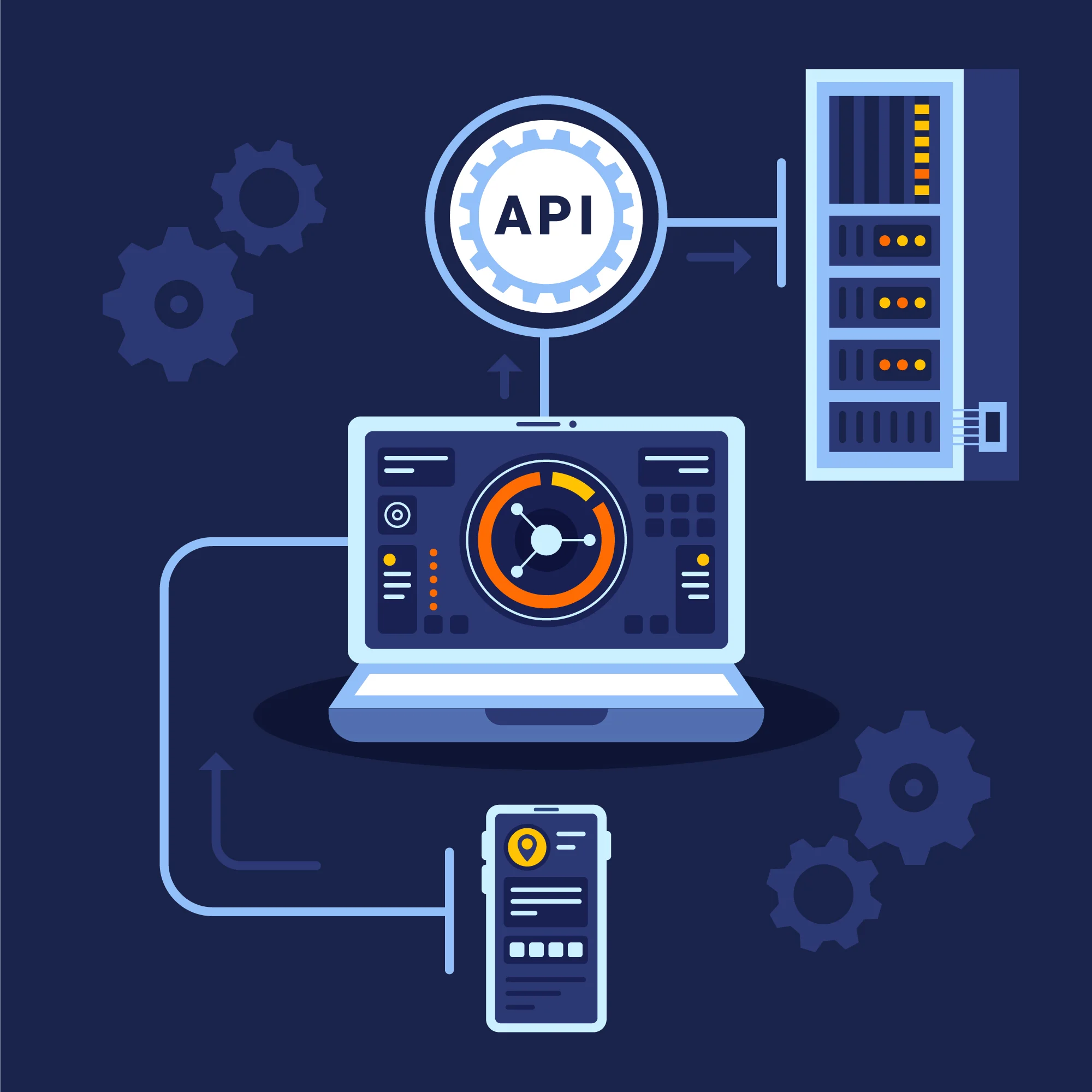
In a monolithic application, security boundaries are clear. In a microservices architecture, everything talks to everything through APIs.
Every service exposes endpoints. Every request moves through multiple internal APIs. Every integration increases exposure.
If APIs are not secured properly, attackers do not need to breach the infrastructure. They simply exploit weak service-to-service trust.
Why APIs become the biggest risk in microservices
In microservices:
Services communicate over HTTP or gRPC
Internal APIs are often assumed to be trusted
Traffic flows across containers and clusters
External APIs connect mobile apps, partners, and third parties
This creates a large attack surface.
Common risks include:
Broken authentication
Over-permissioned tokens
Lack of rate limiting
Insecure service-to-service communication
Excessive data exposure in responses
Most breaches in modern applications begin at the API layer.
Step 1: Strong authentication for every API call
In microservices, identity must be verified at every layer.
Best practices include:
OAuth 2.0 or OpenID Connect for user-facing APIs
Short-lived JWT tokens
Mutual TLS for service-to-service authentication
Avoiding shared static API keys
Internal APIs should never rely on network trust alone.
Step 2: Enforce granular authorization, not just authentication
Authentication confirms identity. Authorization controls access.
Common mistakes:
Using broad access tokens
Allowing services to access more endpoints than required
Not validating scopes inside tokens
Every API should validate:
Who is calling?
What resource are they accessing?
What action are they allowed to perform?
This ties directly to enforcing least privilege across distributed systems.
Step 3: Use an API gateway, but do not stop there
API gateways help with:
Centralized authentication
Rate limiting
Logging
Traffic routing
However, relying only on the gateway is risky.
If an attacker bypasses it or exploits internal APIs directly, controls may not apply. Security must exist both at the gateway and at the service level.
Step 4: Secure service-to-service communication
Microservices rely heavily on internal communication.
Best practices:
Enforce mutual TLS between services
Rotate certificates automatically
Use service meshes for identity-aware traffic control
Prevent direct pod-to-pod communication without policy
Internal APIs should be treated as external.
Step 5: Protect APIs against abuse and automated attacks
APIs are prime targets for:
Credential stuffing
Data scraping
Bot abuse
Denial-of-service attacks
Implement:
Rate limiting
Behavioral anomaly detection
Web Application and API Protection controls
Input validation and schema enforcement
Monitoring API behavior is as important as securing access.
Step 6: Secure API secrets and tokens in CI/CD
APIs depend on tokens and credentials during deployment.
Poor secret management in pipelines can expose:
Backend service tokens
Database credentials
Third-party integration keys
As discussed in the earlier blog on secrets exposure in CI/CD pipelines, securing deployment workflows is part of API security.
Step 7: Log and monitor API activity continuously
Logging should capture:
Failed authentication attempts
Unusual request patterns
High-volume access to sensitive endpoints
Token misuse
Centralized monitoring through SIEM or security analytics tools helps detect abuse early.
At scale, API security becomes less about individual endpoints and more about visibility across distributed environments. If microservices have grown organically without a structured API security review, hidden exposure often accumulates between services.
Also Read: Why Is Enforcing Least Privilege So Difficult in Enterprises (And How to Actually Do It)?
About NetNXT
NetNXT is a managed security services provider supporting enterprises with secure cloud, API, and application environments. Through structured IT services and advanced IT security service capabilities, NetNXT helps organizations secure distributed architectures where identity, APIs, and workloads intersect.
As a focused cybersecurity services provider, NetNXT works with DevOps and security teams to strengthen API authentication, enforce access control, and monitor service-to-service communication without disrupting development velocity.
If your application environment relies heavily on APIs and microservices, a technical review of authentication flows and internal trust boundaries can uncover exposure that typical testing misses. Connect Today.
FAQ
1) Why are APIs a major risk in microservices?
Because microservices rely on API communication, increasing the number of exposed endpoints.
2) Is an API gateway enough to secure microservices?
No. Security must also exist at the service level.
3) How should services authenticate internally?
Using mutual TLS and identity-aware mechanisms, not shared static keys.
4) What is the biggest API security mistake?
Over-permissioned tokens and lack of authorization checks.
5) How can API attacks be detected?
By monitoring abnormal traffic patterns, failed authentication attempts, and suspicious behavior.